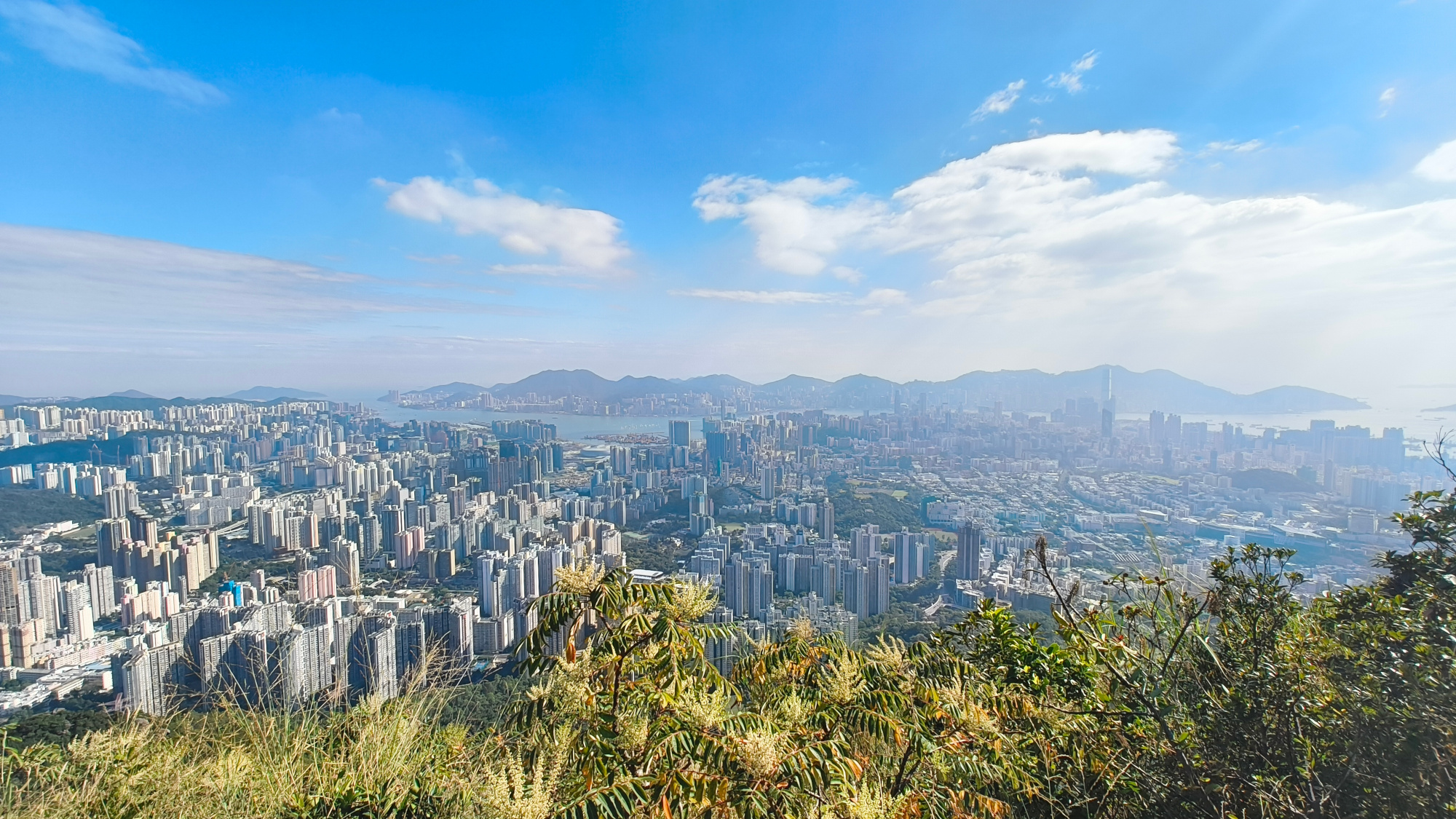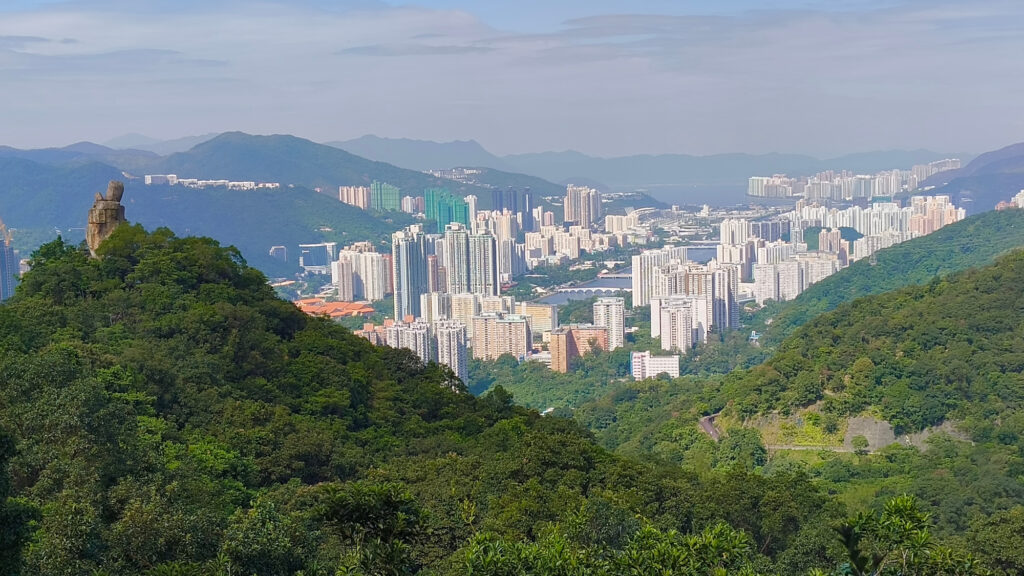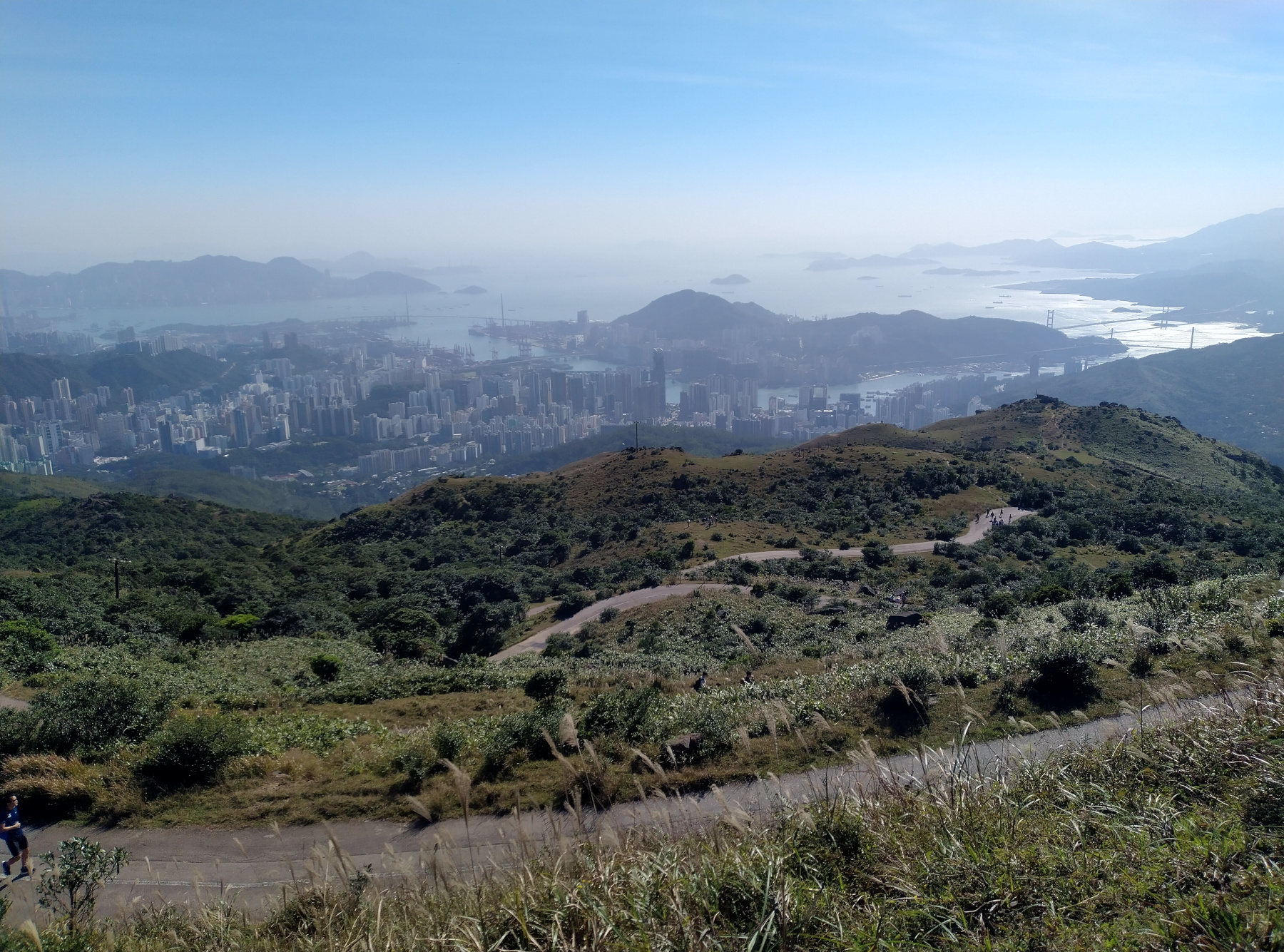
In addition to its (sometimes stressful) urban environment, Hong Kong is renowned for its well-preserved countryside parks, offering a welcoming contrast to the cityscape. The terrain is predominantly hilly, with Tai Mo Shan standing as the highest peak in the region at an elevation of 957 meters. This height is comparable to that of neighboring Lantau Peak on Lantau Island and Mount Wutong in Shenzhen, China. Although the summit is occupied by a radar and military station and is therefore inaccessible to the public, the hike to the peak offers breathtaking panoramic views. To the north, you can gaze out over the landscape, while to the south, the vistas extend towards Kowloon and Tuen Mun. On a clear day, you can even see Shenzhen, Hong Kong Island, and the surrounding islands in the distance.
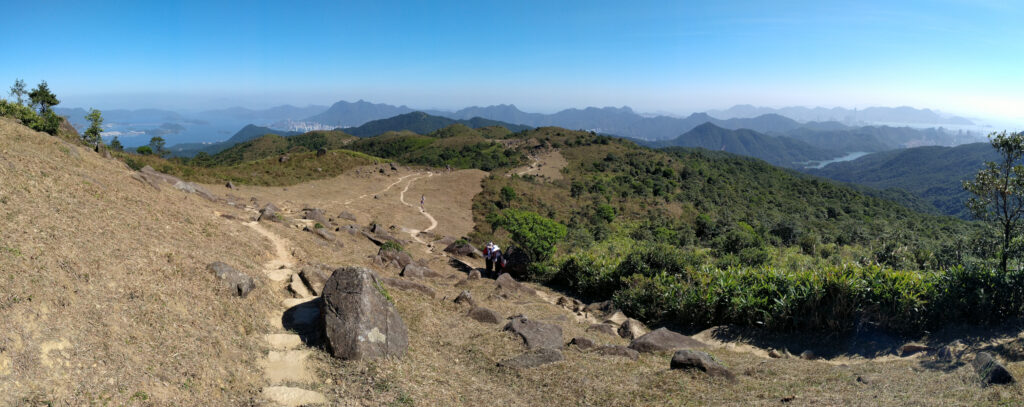
Panoramic view near Yin Ngan Peak (679m)
To hike Tai Mo Shan, there are many access points, primarily from the west starting at Route Twisk or from the east via Leadmine Pass. In this blog, I’ll introduce you to the route starting from Tai Po. You can take minibus 23K to its last stop at San Uk Ka Village, which begins at Tai Po Market. From there, follow the road uphill, which is also part of the Wilson Trail Section 7. After about 15 minutes, look for a small footpath with stairs on your right. Take this path, which leads into a small forest featuring a mix of flat sections and steep inclines.
Soon, you’ll reach Leadmine Pass, a great spot to take a break, refill your water, and use the public toilet. At an elevation of around 400 meters, Leadmine Pass offers a convenient resting point. To the east lies Grassy Hill, while further south, the Shing Mun Reservoir stretches out. From here, we decided to head west directly towards Tai Mo Shan.
Be aware that a very steep section of the trail lies ahead, with an elevation gain of around 200 meters. Take it slow and steady—soon, the terrain will flatten out as you reach one of the many subpeaks, such as Yin Ngan Peak (679 meters). From this point onward, the trail can become very exposed to the sun, so it’s advisable to prepare sun protection, especially on a clear day.
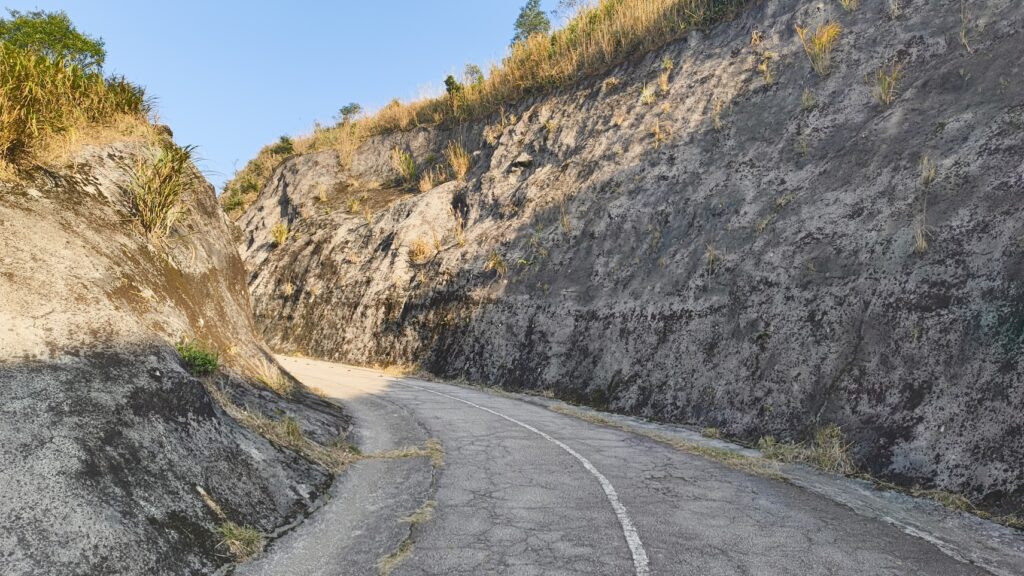
Follow the trail, and you’ll soon reach a road (closed to cars). Continue along this road as it leads you toward Tai Mo Shan. Be prepared for the final stretch—the last few hundred meters to the peak are very steep. As you ascend, don’t forget to pause and look northward for stunning views of Shenzhen and the New Territories.
If you plan your time ahead, you can also plan to be at the peak for sunset. I observed the sunset several times at Tai Mo Shan at it was always a magical amount. When descend you can follow down the street. Unfortunately at some point it is open to public cars, and many drivers are not used to the hilly and narrow environment so try to keep safe. However, there is a small footpath to your right which allows you to descend through the forest on the MacLehose Trail. I would recommend the path unless it is already dark.
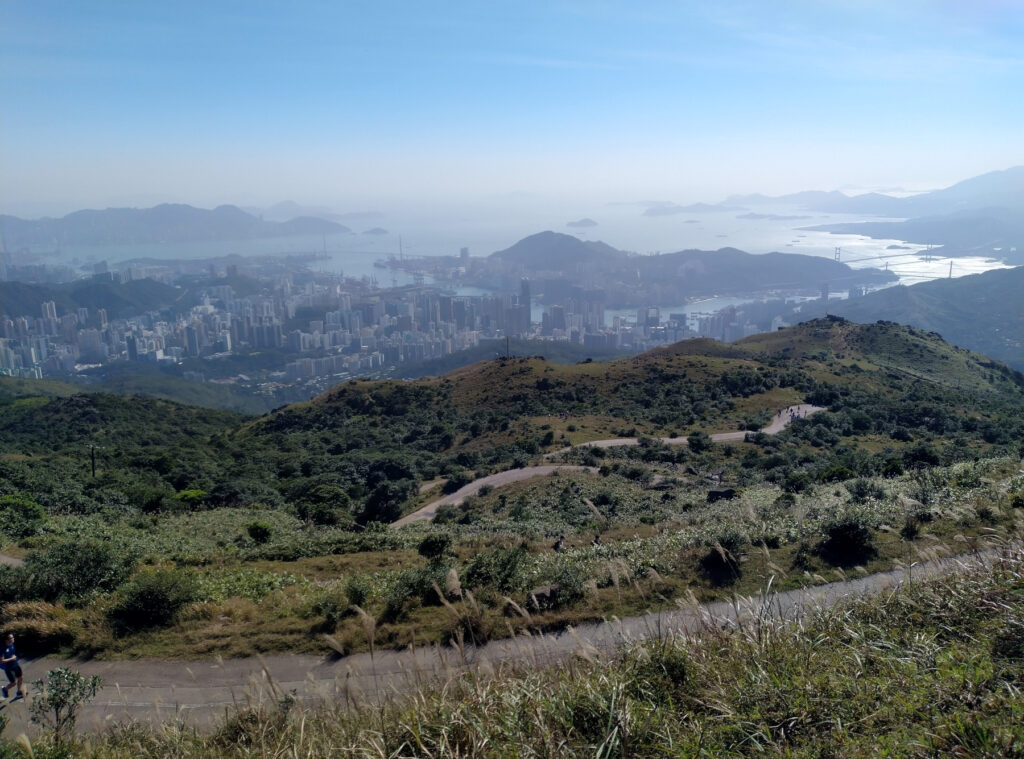
Once you reach the peak you will get a view towards the Soutwest towards Tuen Mun. From here, it is about 45 min back to the bus station. Once you reach Route Twisk, you can take a bus back to Tsuen Wan. Keep in mind that on weekdays, buses run only once every 60 minutes, but on weekends, the frequency increases, making it easier to catch a ride.
The hike begins with a shaded path. However, as you progress, the trail becomes increasingly exposed.
| Length | 11.8 km |
| Uphill/Downhill | 920 m/480 m |
| Highest Peak | Tai Mo Shan(957 m) |
| Recommended Season | Autumn to spring |
Download GPX-File: Tai Mo Shan from Tai Po